Platform Capabilities
Designed for how trials actually run
Each component of DoseMind maps directly to a step in the oncology dose-optimization workflow - from PK sample collection through regulatory submission.
Bayesian PK Engine
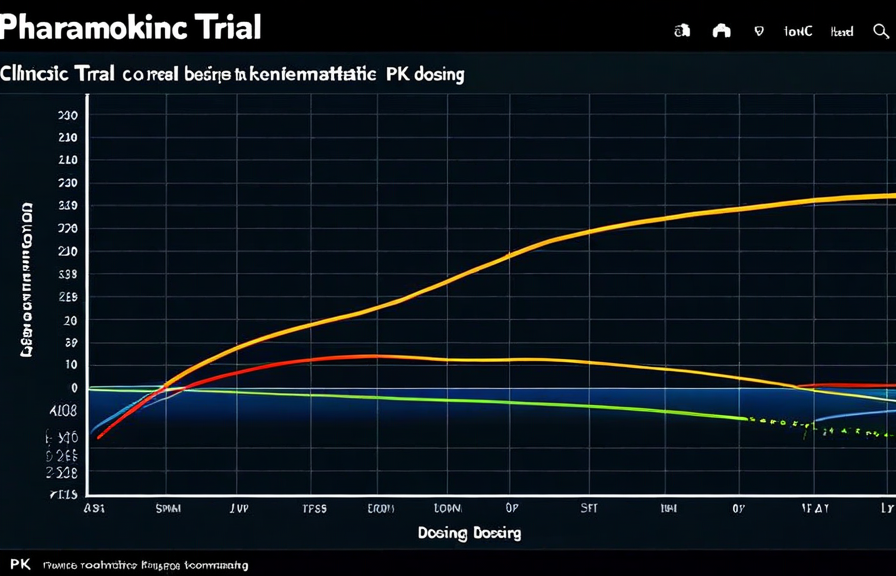
Fits individual patient pharmacokinetic curves using a two-compartment model with MAP Bayesian estimation. Updates AUC and Cmax projections after each observed concentration, with 95% credible intervals surfaced to the clinician.
Real-Time Lab Integration
Connects to HL7 FHIR endpoints to ingest CBC, creatinine clearance, and hepatic function values as they post. Dose recommendations automatically update when organ function values cross predefined thresholds.
Toxicity Prediction Module
Estimates probability of grade 3/4 adverse events per CTCAE v5.0 based on the projected PK exposure. Surfaces risk scores before each cycle so investigators can preemptively reduce or hold dose.
Regulatory-Ready Reports
Generates dose rationale documents formatted for IND annual reports, DSMB packet appendices, and clinical study report sections. Output includes the PK model parameters, observed vs predicted concentrations, and decision log.
Multi-Site Trial Support
Handles population-level PK parameter sharing across sites while enforcing site-specific data access controls. Each site's CRC sees only their patients; the central biostatistics team views the aggregated population model.
21 CFR Part 11 Audit Trail
Every dose recommendation, override, and parameter change is timestamped and attributed to a specific user role. Electronic signature workflows conform to FDA 21 CFR Part 11 and EU Annex 11 requirements.